
2019: Vampire: the Masquerade players’ book
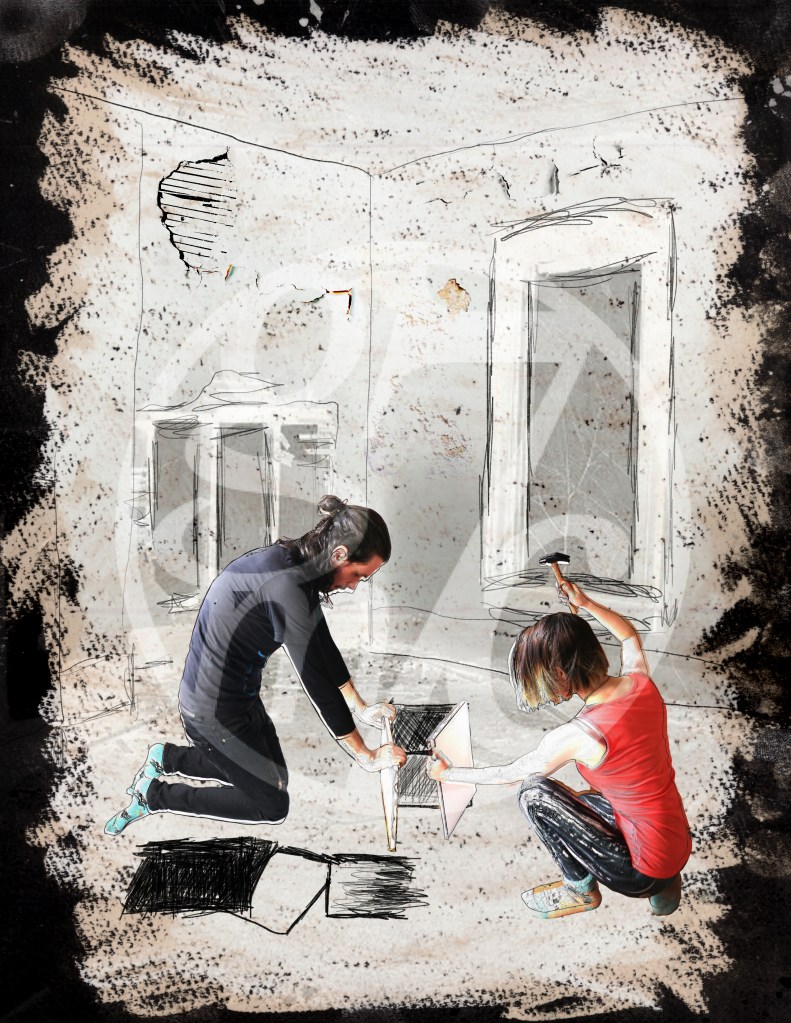
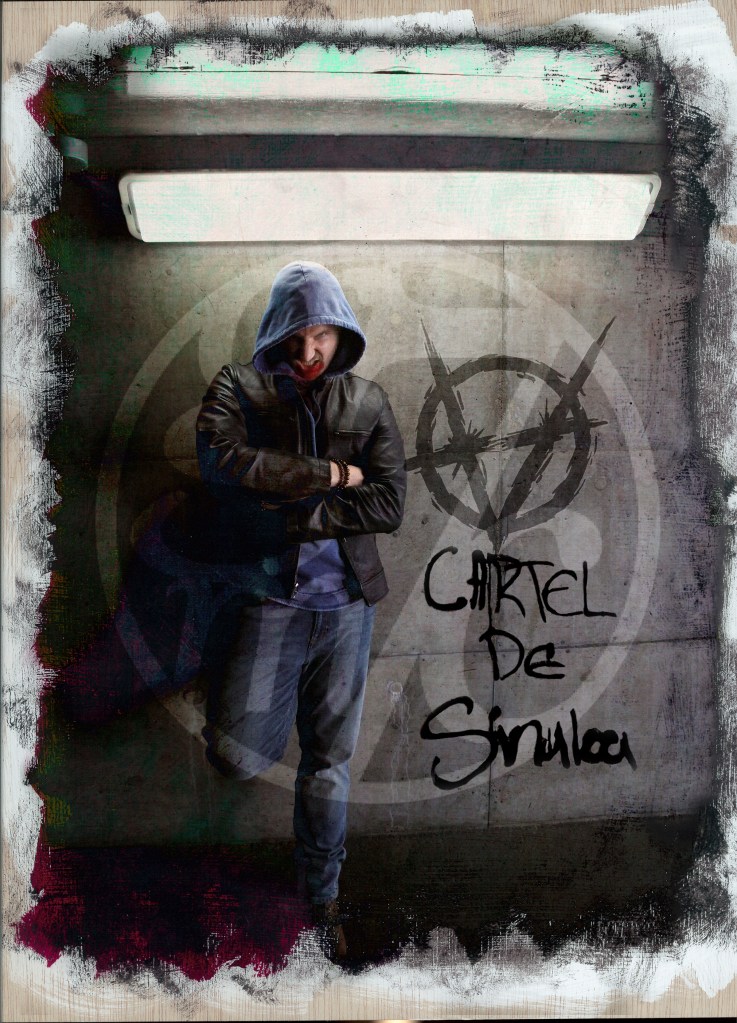
Gina-Marie was commissioned to create the images for a new players’ guide book to be released in 2020. The images are a combination of her own photography, stock images, and both digital and hand illustration in Photoshop, and follow the idea that people experience the effects of hallucinogenic drugs in a multitude of ways, whether they be human, vampire, or other.




*
2018: Children’s book: A Day in the Life of Goober Maroo
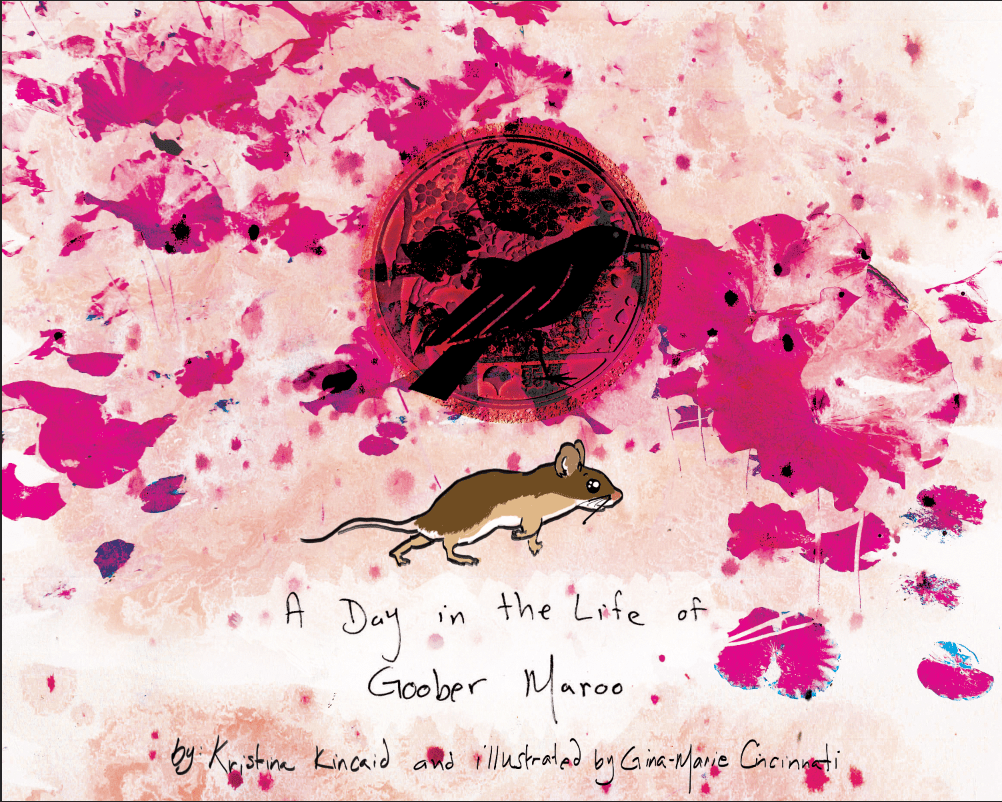
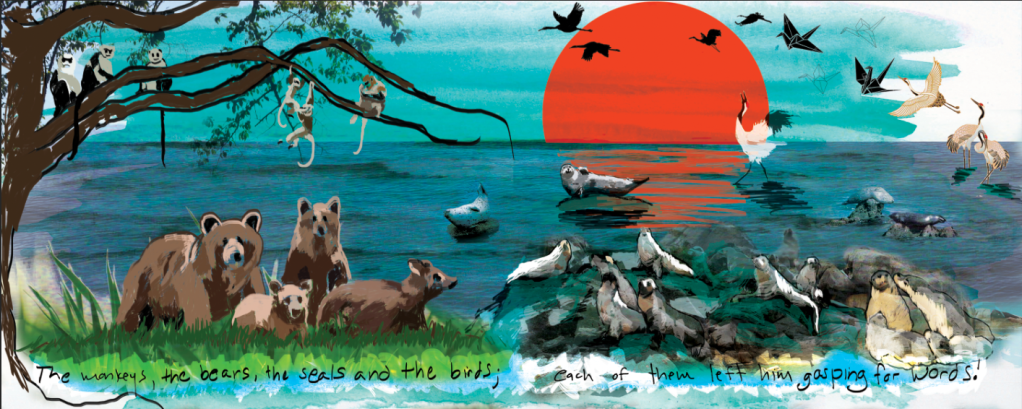
2018: Using a combination of her own photography, stock photography, hand, and digital illustration in Photoshop, Gina-Marie created this book for a good friend who had asked her to consider illustrating it years before.
The story follows a mouse who gets lost in a zoo and has to overcome their fear in order to get help and find their way home. The photos are from Ueno Zoo in Tokyo.




*
March 2018: Hibakusha (被爆者)
After learning the story (stories) of how the Hibakusha (被爆者) were treated in Japan after the bombings during WW2, Gina’s heart was full of emotion, and she felt the need to illustrate the image that came to mind.
Materials: Gouache, ink, pen, digital photo, digital drawing. Combined in Photoshop.
(Below: excerpt from a blog she wrote about it):
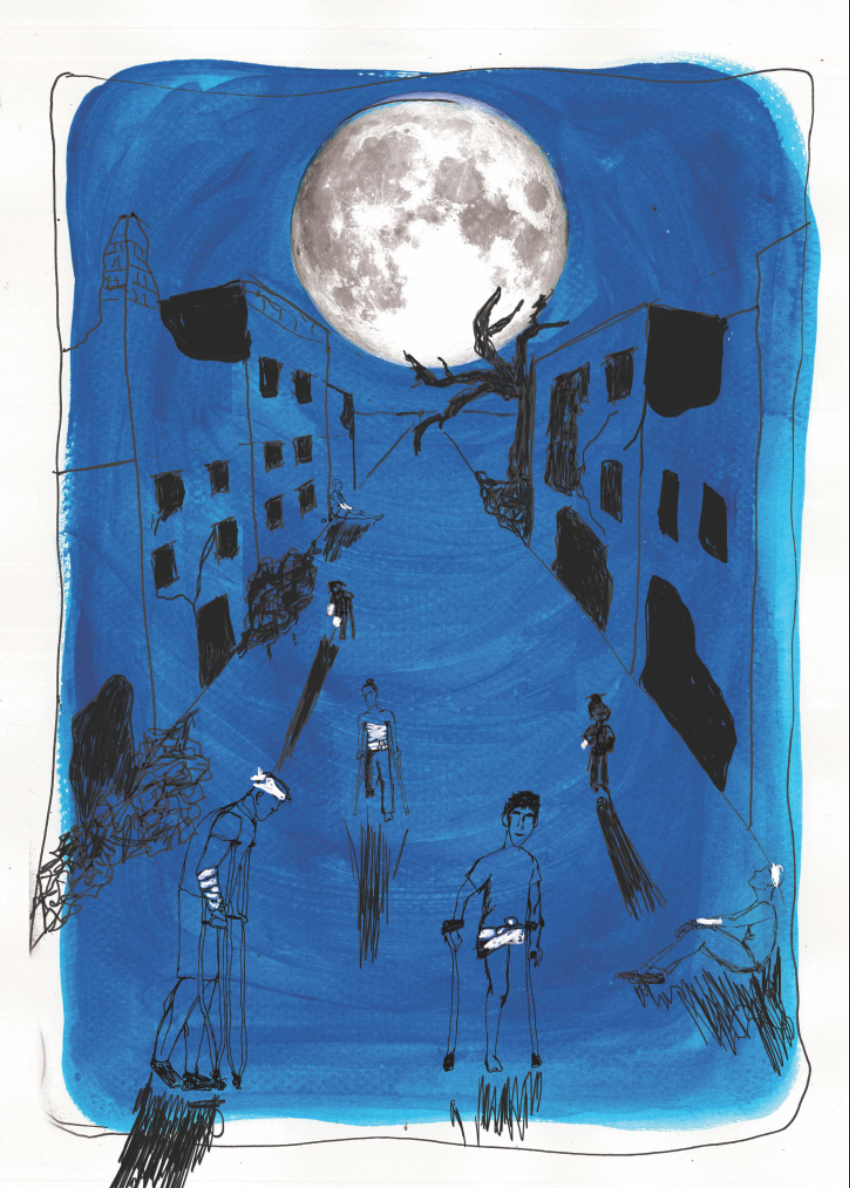
It’s the story of the bombing survivors, the Hibakusha. The people who lived. They survived the worst possible thing that could happen and then tried to get on with their lives just like any of us would. But they couldn’t, due to a myriad of reasons. If they were disfigured or scarred, people were afraid of or disgusted by them, and didn’t want to see them. If they weren’t disfigured and appeared fine and normal, people still didn’t want to marry them or hire them, because they didn’t know about the effects of radiation on the body and thought it might be contagious, or passed on to future children, infect new towns, etc.
This led to an entire group of people who survived this terrible event being discriminated against in multiple ways. If they moved to a new place far away from their homes, people would still keep away from them after they heard where they were from. If they tried to lie about where they were from, some people hired private detectives to find out if they’d been in Hiroshima or Nagasaki when the bombings occurred.
At a time when they should have been celebrated for their survival and lauded as symbols of Japan’s will to rebuild, they were shunned.
A student told me that his parents grew up in what was left of Hiroshima after the bombings. While both of his parents were fine, they still lived in an area that had been reduced to rubble. Their families were trying to rebuild and reclaim what they could, in order to have some semblance of a normal life and to make better lives for their children. The survivors who were disfigured, scarred or missing limbs were seen as a burden and an embarrassment. No one wanted to interact with them. They often had to fend for themselves.
They stopped going out during the day, when they could be seen clearly, and only went out at night when it was dark.
My student’s parents were afraid to go out at night because that’s when the monsters came out.
 Gina-Marie